
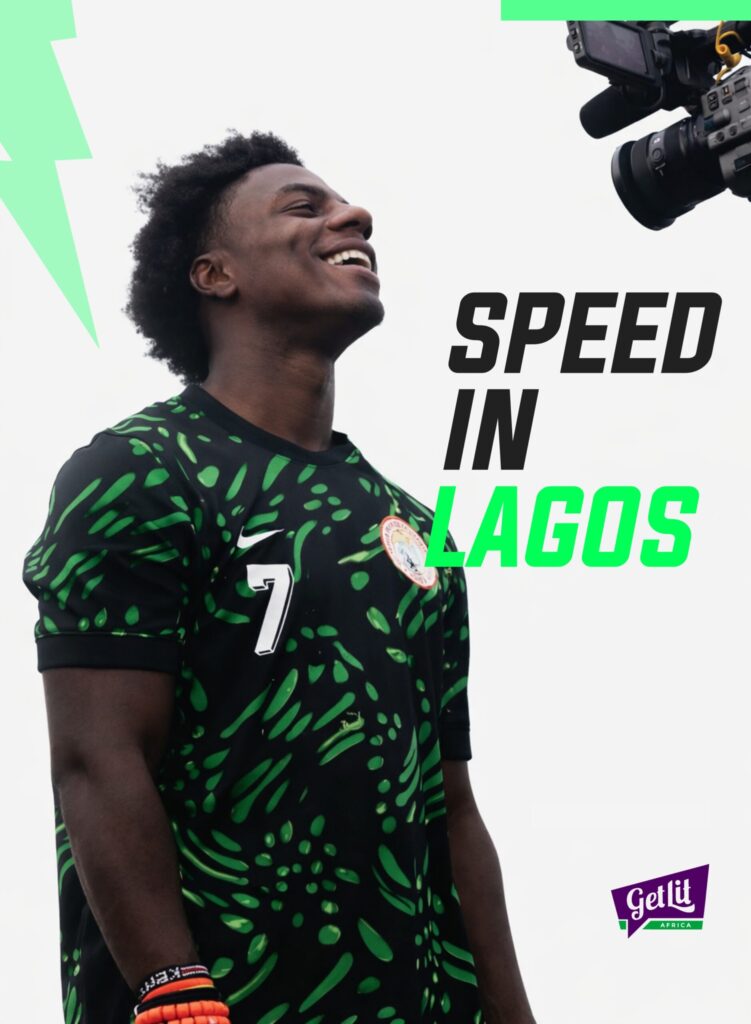
Speed’s short time in Lagos, Nigeria, exposed something far deeper than a chaotic livestream. It highlighted some of the country’s most uncomfortable realities, dangerous begging, entitlement complex, clout-chasing, and a level of shamelessness that feels all too familiar and alarming.
Speed, a popular American streamer, set out on a tour across different African countries with a clear intention: to experience culture, spotlight underrepresented communities, and share everyday life as it truly is. But somewhere deep in the heart of Nigeria, our very own Lagos—that intention was compromised. What should have been a pleasant cultural exchange slowly dissolved into what felt like a circus play.
What was meant to be exciting quickly became regrettable and it seemed as though everyone wanted a piece of Speed—his platform, his money, his visibility—without any regard for the vision behind the tour. From mobs chasing him through the streets to the point where he and his team had to hide, to influencers and e-celebrities aggressively pushing for collaborations, to random individuals openly begging for favors with a strange sense of entitlement.
One moment that stuck out to me was when someone insisted—by force, by fire—that Speed must skate on his board, even after the streamer kept explaining he could not skate, but the guy just wasn’t listening. It was very annoying to see if we are being honest.
And the thing is, this wasn’t Speed’s first stop in Africa. Before and after Nigeria, he visited other countries where he experienced culture in its most authentic form. The people were vibrant. The energy was warm. There was excitement—but also respect. No one was desperately pushing agendas. No one was forcing collaborations. The moment was allowed to exist as it was.
Lagos, unfortunately, showed its ugliest side. There was a constant overriding of basic protocol. Everyone pressing for favors. Forced interviews he clearly wasn’t interested in. Fans demanding attention, money, validation—anything. It was exhausting to watch. And by the end of it, the point of the visit had completely evaporated.
Ironically, I didn’t entirely hate the outcome. For the longest time, Lagos has survived on premium PR. From the music industry to Hollywood co-signs, Detty December to influencer culture, curated aesthetics, to even the Ikoyi Link Bridge becoming a tourist attraction—we have sold an image that often glosses over reality. Somewhere along the way, we almost forgot how underdeveloped and disconnected we are as a community. It took one streamer for us to show ourselves—quickly and loudly.
As the tour comes to an end, watching everything unfold made me question the story Lagos—and Nigeria as a whole—is telling. Other cities and countries have distinct identities. Their culture is tangible. Their history is preserved. Their art, food, fashion, architecture, and innovation tell a story. Think of Italy, Greec, Dubai, France, Egypt, China, Ghana, South Africa. Even with their flaws, their identities are clear.
But Nigeria?
It feels almost impossible to point to one defining cultural experience that feels intentional and protected. And that’s troubling, since it is referred to as the Giant of Africa. We’ve lost the story, and stories matter. They tie people to land, to history, to meaning. They’re the reason foreigners visit and leave with something to remember. But here, everything feels rushed, transactional, surface-level. There’s very little depth to take home.
Perhaps if Speed had been able to visit places beyond the chaos—Olumo Rock, Badagry’s slave trade routes, Tarkwa Bay, Erin Ijesha Waterfalls, Zuma Rock—he might have found what he was searching for. But would it have changed anything? Or does the problem run deeper? Does the story still feel misplaced? Do you feel that missing sense of community and identity?
When you strip it all down, it wasn’t just about one visit gone sour. It was about how selfishness, desperation, and shameless entitlement can cloud a collective story—and why, in that moment, Lagos lost its soul.
Now that everything has been said and done, it is important to realise that this moment doesn’t have to define us. I mean, yes we are layered with multiple complexities and challenges, but we are full of stories that deserve to be told properly—stories of resilience, creativity, history, hustle—the story of the Nigerian spirit that often gets buried beneath the noise of struggles and desperation. Perhaps this experience is a reminder for us to slow down and reflect on our roots, and to be more intentional about how we express our identity when the world is watching; because I believe the soul of a city is the essence of its community.